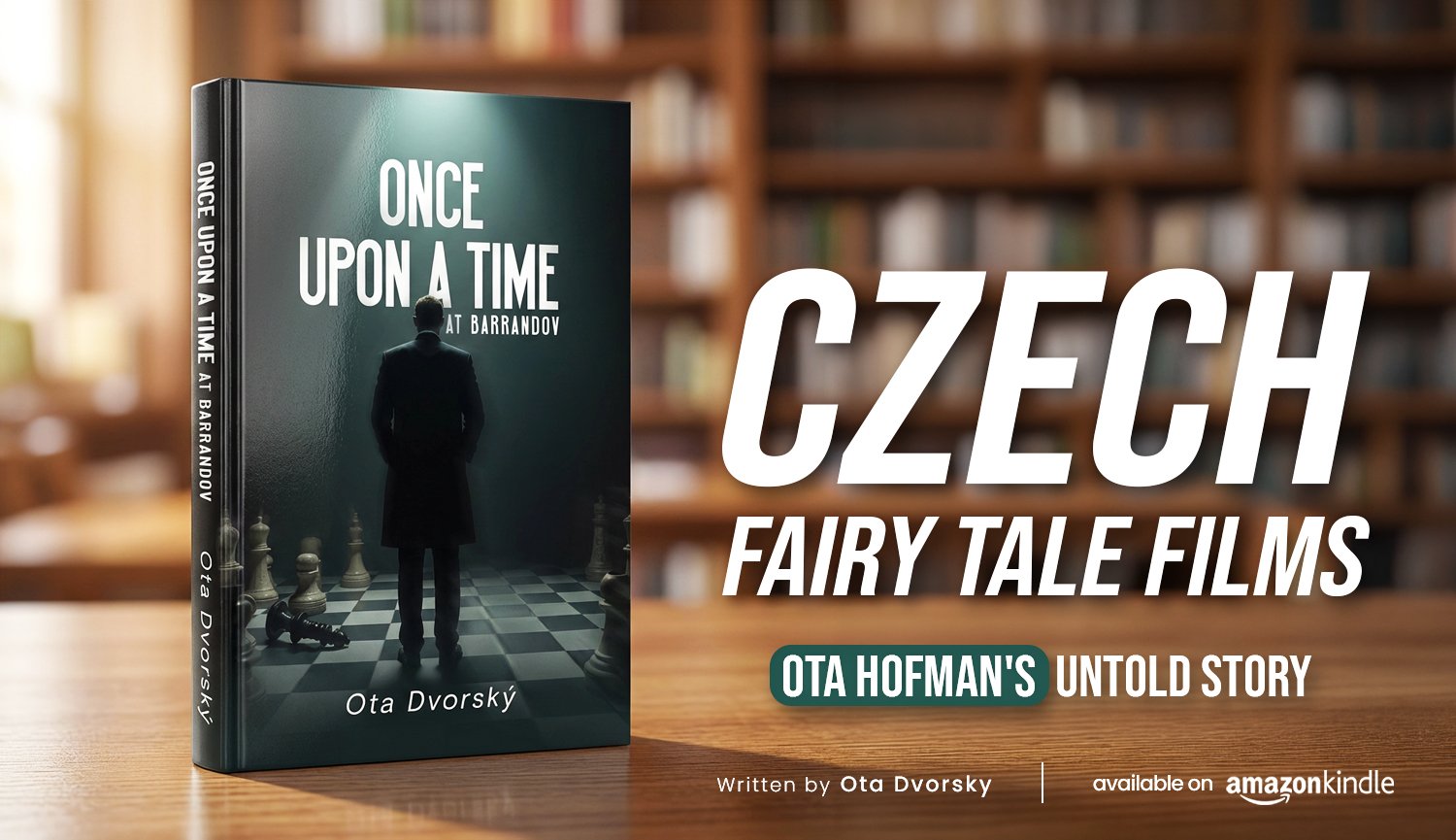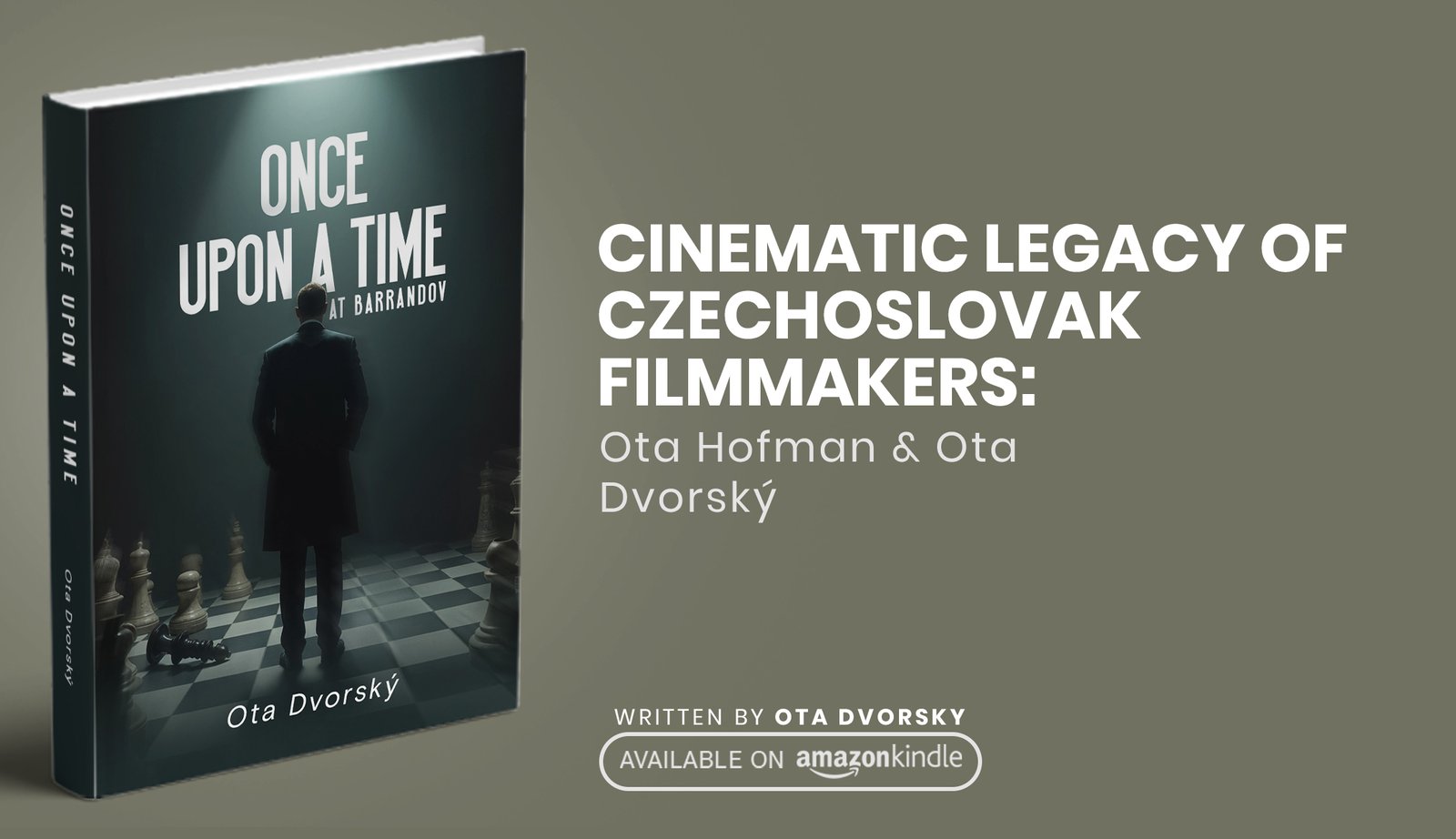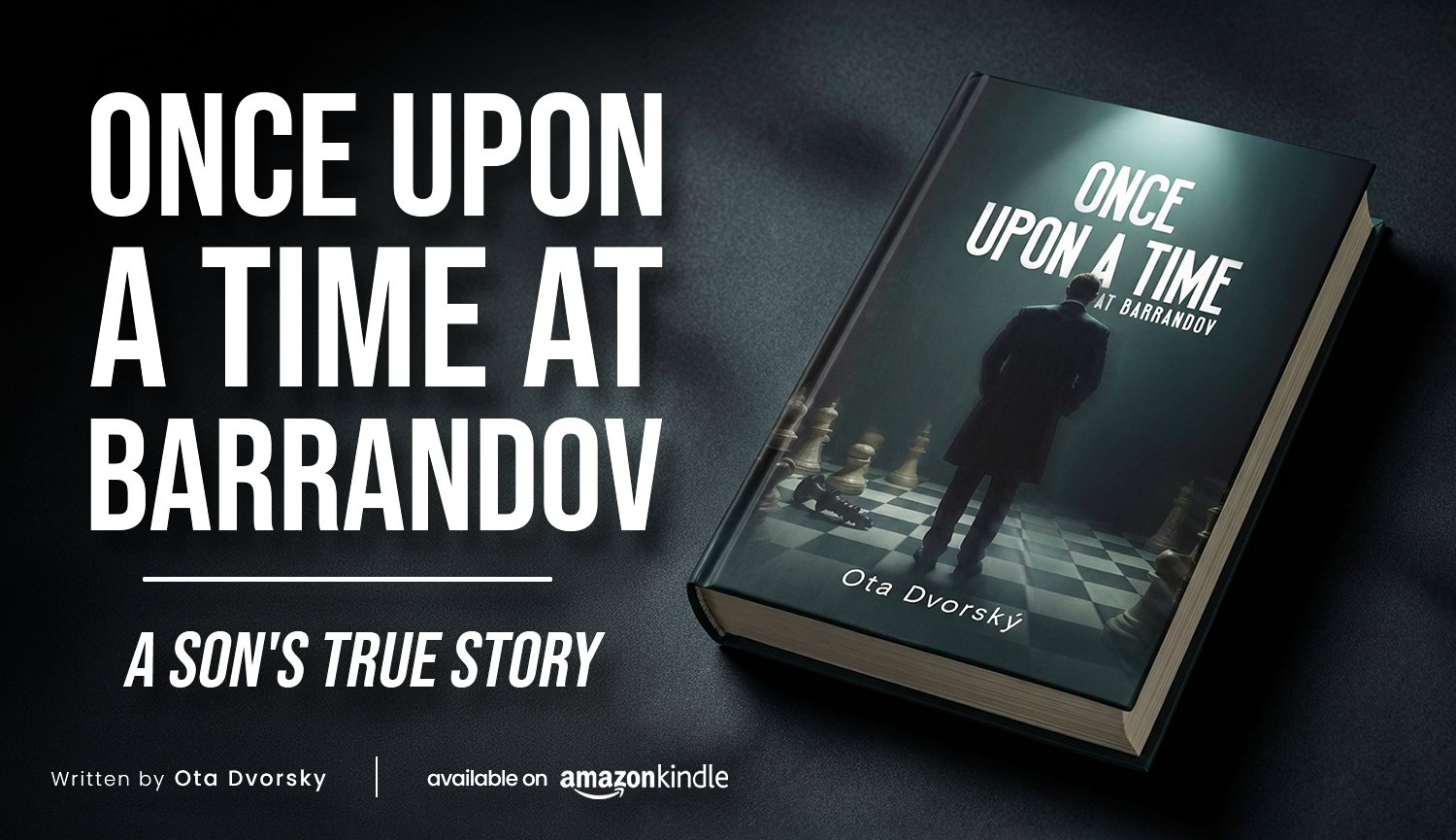
There are stories that belong in history books. Then there are stories that belong to the people who lived them. Once Upon a Time at Barrandov by Ota Dvorský is firmly the second kind.
Written by the son of Ota Hofman, one of Czechoslovakia’s most gifted children’s film screenwriters, this book brings to life a world that film historians rarely explore: the creative community at Barrandov Studios between 1968 and 1973, when political pressure was at its most intense and artistic courage was most needed.
What Is Once Upon a Time at Barrandov?
This novel is a work of historical fiction grounded in real events, real people, and real decisions. It follows the children’s and youth dramaturgical group at Barrandov Studios through the turbulent years that followed the Soviet invasion of Czechoslovakia in August 1968.
It opens with a deceptively simple premise. Some of the most beloved Czech children’s films ever made, including Three Nuts for Cinderella and I’m Jumping Over Puddles Again, were written by screenwriters who had been banned from putting their names on anything. They kept creating anyway. Other people lent their names, signed the screenplays, and took on enormous personal risk so that those films could exist.
He grew up watching these films take shape. His father was at the centre of that world. This book is his attempt to tell the story behind the story.
Who Is Ota Dvorský?
He is the author and the son of Ota Hofman. He did not set out to write a conventional biography or a dry piece of historical fiction about cinema. He set out to write the book that he felt his father’s world deserved: honest, human, and told from the inside.
As an author, Dvorský brings a rare combination of personal memory and careful research. He knew the people in this story, or knew of them through his father’s experiences. He understood the rhythms of life at Barrandov Studios, the daily negotiations, the quiet acts of solidarity, and the moments where one wrong decision could end a career or endanger a family.
This book is the result of that understanding. It reads like a novel written by someone who was actually there.
What Makes This Book Different from Other Czech Film History Books
There are other Czech film history books that cover this era. Most of them treat the films as the subject and the filmmakers as background detail. Once Upon a Time at Barrandov reverses that approach entirely.
Here, the people are the subject. Ota Hofman himself is a central figure: an introverted man with a genuine fondness for children, organised and quietly authoritative, always well-dressed, always with a cigarette, always finding a way to protect the creative work he cared about. Jan Procházka, the head dramaturge, is a tragic figure whose commitment to artistic freedom ultimately cost him everything. František Pavlíček, the screenwriter, is warm and funny and deeply principled. These are not background figures. They are the story.
This is what separates this novel from books about filmmaking that focus on technical history or political analysis. It is a book about people navigating impossible circumstances with intelligence, humour, and moral seriousness. Readers interested in historical fiction about cinema will find it unlike anything else available on the subject. To understand the world these people came from, Czech Fairy Tale Films: Ota Hofman’s Untold Story offers essential context on the films and the creative courage behind them.
The World Once Upon a Time at Barrandov Brings to Life
The Barrandov Studios recreated in this novel is not the grand institution of official film history. It is a working environment where scripts were reviewed and questioned, where careers could be ended by a single meeting, and where the creative group for children’s films quietly became one of the most productive and subversive departments in the building.
The book moves between Prague, Paris, West Germany, and the Czech countryside, following its characters through the years of hope before August 1968 and the years of slow suffocation that followed. It documents how banned writers continued to work through trusted colleagues, how international co-productions offered a rare window of creative freedom, and how ordinary professional decisions carried extraordinary personal weight.
For readers drawn to books about filmmaking and the human cost of creative work under political constraint, the novel offers a perspective that no straightforward Czech film history book can provide.
Why Ota Dvorský Wrote This Book Now
The films that came out of Barrandov Studios during this period have been popular for more than fifty years. They are broadcast on television every Christmas across Central Europe. New generations discover them regularly. Yet the stories of the people who made them, the real risks they took and the real sacrifices they made have remained largely untold.
He wrote this book because he believed those stories deserved to be told while they could still be told with the texture and warmth of someone who was close to them. As explored in Censorship in Film: Ota Dvorský Tells the Stories Behind the Screen, the personal dimension of this history is precisely what makes it worth preserving.
The result is a book that works on multiple levels: a compelling work of historical fiction about cinema, a tribute to a remarkable group of artists, and a son’s honest attempt to honour his father’s legacy.
Where to Buy Once Upon a Time at Barrandov
Once Upon a Time at Barrandov by Ota Dvorský is available on Amazon in both print and digital editions. It is one of the few titles that places real human beings, not institutions or movements, at the centre of the story.
FAQs
What is Once Upon a Time at Barrandov about?
This novel is set at Barrandov Studios between 1968 and 1973. It follows the children’s film creative group through the years of Soviet-era political pressure, focusing on the real people behind some of Czechoslovakia’s most beloved films.
Who is Ota Dvorský?
He is the son of Ota Hofman, a prominent screenwriter at Barrandov Studios. His background gives the book an authenticity that sets it apart from conventional Czech film history books.
Is this book a biography or a novel?
It is historical fiction grounded in real events and real people. He combines documented history with imaginative reconstruction to create a narrative that captures both the facts and the emotional reality of the period.
Where can I buy Once Upon a Time at Barrandov?
The book is available on Amazon in print and digital formats. It is suitable for readers interested in Czech film history, Cold War cultural history, and personal stories of creative courage.
What makes this different from other books about filmmaking?
Most books about filmmaking focus on films, directors, or movements. This novel focuses on the people behind the work, their daily decisions, relationships, and moral choices, making it a uniquely personal account of a remarkable era.