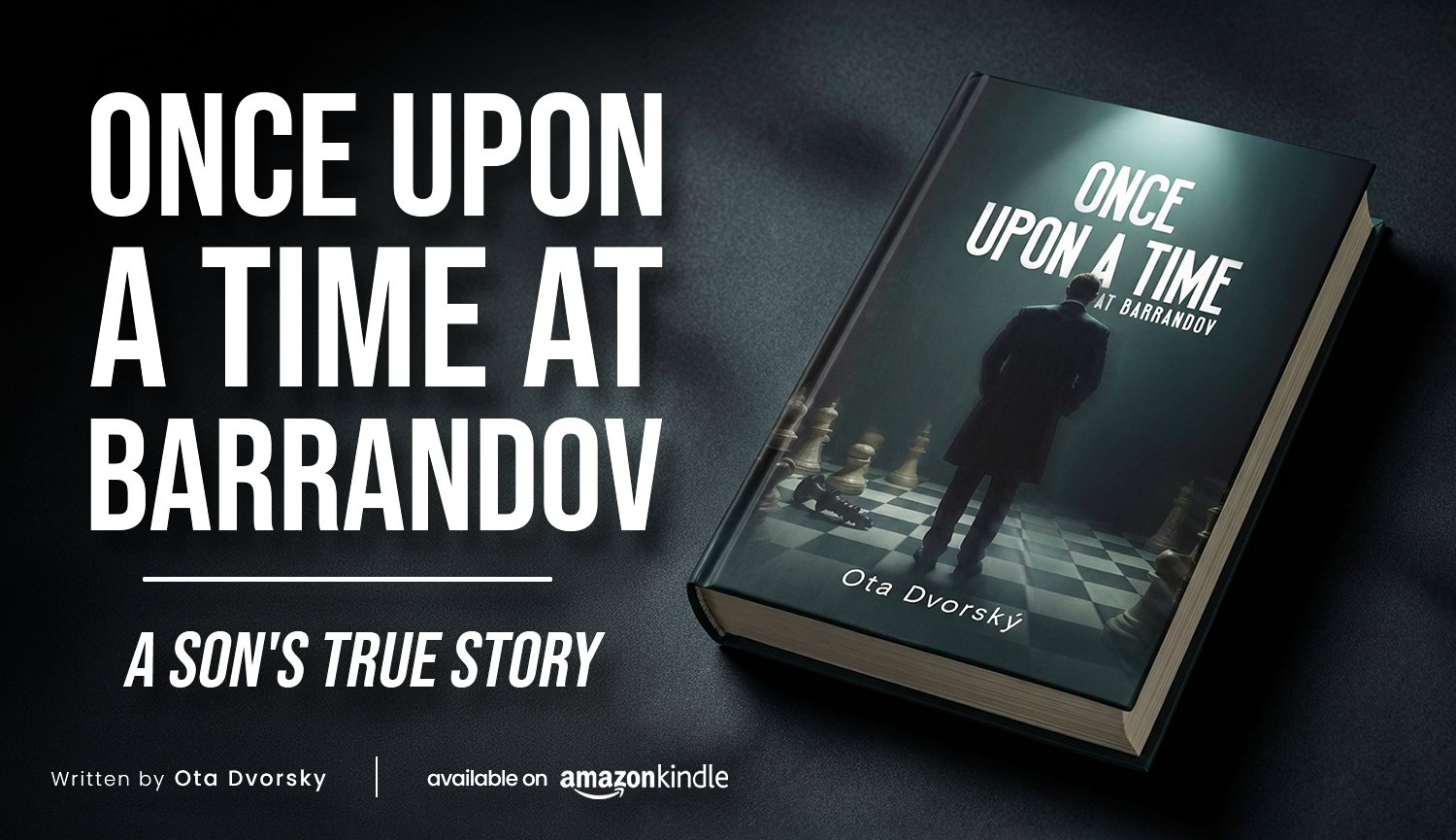
Some of the most beloved Czech fairy tale films ever made were written by a man who was not allowed to put his name on them. That contradiction sits at the heart of Ota Hofman’s career and at the heart of Once Upon a Time at Barrandov, the novel his son Ota Dvorský wrote to ensure that story was finally told.
For decades, audiences across Europe have watched these films without knowing who truly created them. Behind the magic of Czechoslovak children’s cinema lay a world of quiet courage, political risk, and remarkable creative determination.
What Made Czech Fairy Tale Films So Different
This genre of children’s cinema was never simply entertainment. At Barrandov Studios during the 1960s and 1970s, children’s cinema became one of the few spaces where imagination could breathe freely. Screenwriters working in this genre discovered that fairy tales offered something no other format could: a layer of symbolic protection.
A story about a kind-hearted girl outwitting a cruel stepmother was also, for those paying attention, a story about surviving an unjust system. A tale of a boy who refuses to give up carries a quiet lesson in resilience. Czechoslovak children’s cinema communicated on two levels simultaneously, and audiences on both sides of the Iron Curtain responded to it.
This is what gave these films their lasting power. They were emotionally honest in a world that demanded conformity. They trusted children to understand complexity. And behind many of the finest examples stood one figure whose name the authorities had done their best to erase.
Ota Hofman: The Screenwriter Behind the Magic
Ota Hofman was one of the most gifted screenwriters working at Barrandov Studios during one of its most turbulent periods. As an Ota Hofman screenwriter, he helped shape some of the most beloved Czech fairy tale films in Czechoslovak cinema history. He brought warmth, moral intelligence, and quiet subversion to everything he created. His characters were never cardboard heroes but flawed, curious, and searching, drawn with genuine affection for children and their inner lives.
Hofman’s children’s films used the fairy tale genre not as an escape from reality but as a way of speaking truthfully within it. His stories celebrated individuality, kindness, and the courage to do what was right even when it cost something. In the political environment of the late 1960s and early 1970s, those were not neutral values.
When Soviet-era pressure on Czechoslovak cinema intensified after 1968, many writers found themselves blacklisted. Some had their names removed from projects they had created. Others worked anonymously or through intermediaries. Hofman navigated this world with both creativity and integrity, finding ways to keep making meaningful work while protecting the people around him.
His story is one that film historians rarely explore in depth, because children’s cinema was often treated as a minor genre. What Ota Dvorský understood is that this dismissal was precisely what allowed these films to survive and precisely why their story deserves to be told.
Czech Fairy Tale Films and the Courage They Required
The most celebrated Czech fairy tale films of this era did not emerge easily. Three Wishes for Cinderella, still broadcast as a Czech Christmas movie across Germany, Norway, and Central Europe every year, was the product of a creative environment where every script was scrutinised and every name carried political weight. Behind its timeless story of courage and kindness lay work by writers who had been banned from using their own names.
Ota Hofman’s children’s films from this period were shaped by the tension between artistic ambition and political survival. The people who made them knew that their work would outlast the regime. They also knew that getting it made at all required patience, ingenuity, and a willingness to take personal risks.
Hofman’s role in this world was central. He served as both a creative force and a quiet protector, someone whose position at the studio allowed him to support colleagues whose careers had been officially ended. That contribution went unrecorded for decades. It belongs to the hidden history of Czech fairy tale films, the history that Once Upon a Time at Barrandov finally brings into the light.
Czech Fairy Tale Films and the World They Reached
What is remarkable about this era of Czech cinema is how far it travelled. These films crossed borders that most Eastern European cultural products could not. They appeared on West German television. They were broadcast in Scandinavia. They found audiences in countries that had no direct connection to Czechoslovakia but responded immediately to the emotional honesty of the storytelling.
Hofman was directly involved in some of those international connections. His relationship with producers from West German television, documented in Once Upon a Time at Barrandov, reflects a dimension of this story that is rarely discussed. At a time when the Iron Curtain made East-West cultural exchange nearly impossible, these productions found a way through. Their universal themes and visual imagination made them resonate with audiences everywhere.
That international reach also meant these films quietly carried Czech cultural identity far beyond the country’s borders, including its warmth, its humour, and its refusal to be entirely crushed by political circumstance. As explored in Timeless Stories: Preserving Czechoslovak Film Magic Through Generations, the spirit of that era continues to resonate with new audiences today.
Why Ota Dvorský Wrote This Story Now
Ota Dvorský grew up in the world these films created. As Hofman’s son, he had access not only to memories but to a deep understanding of what lay behind them, including the choices his father made, the risks he accepted, and the films that should never have existed but somehow did.
Once Upon a Time at Barrandov is built on the conviction that these films deserve a fuller accounting than history has given them, and that the people who made them deserve to be remembered not as footnotes but as the complex, courageous individuals they were.
The book does not read like a history lesson. It reads like a story, because Dvorský understood that the best way to honour his father’s work was to use his father’s method. For readers who love this genre or who are discovering it for the first time, it offers something rare: the world behind the magic, told by someone who lived inside it.
Famous Classics Worth Knowing
Before diving into the world Ota Dvorský recreates in his novel, it helps to know the films that defined this tradition. Some classics from this era include:
- Three Wishes for Cinderella (1973): Still broadcast every Christmas across Germany, Norway, and Central Europe
- The Proud Princess (1952): One of the earliest and most cherished entries in the genre
- Prince Bajaja (1950): A visually rich fairy tale that set the tone for decades of Czech children’s cinema
- The Salt Prince (1983): A later classic that carried the same storytelling spirit forward
These films helped establish Czech fairy tale films as one of Europe’s most beloved cinematic traditions. What they share is not just charm but a moral seriousness, the same quality that Ota Hofman brought to everything he wrote.
Where to Find Once Upon a Time at Barrandov
Once Upon a Time at Barrandov by Ota Dvorský is available on Amazon in both print and digital editions. Readers drawn to Czech film history and the hidden stories behind Europe’s most enduring fairy tales will find it an essential read.
FAQs
What are Czech fairy tale films?
This genre represents a beloved tradition of Czechoslovak children’s cinema, known for its emotional honesty, visual beauty, and layered storytelling. Films like Three Wishes for Cinderella remain popular Czech Christmas movies across Europe decades after their creation.
Who was Ota Hofman?
Ota Hofman was a screenwriter at Barrandov Studios, widely regarded as a key figure behind Czechoslovak children’s cinema in the 1960s and 1970s. His children’s films combined warmth and moral intelligence with subtle resistance to political censorship.
What is Once Upon a Time at Barrandov about?
Written by Ota Dvorský, the novel tells the story of the creative community at Barrandov Studios during 1968 to 1973, focusing on the people behind Czech fairy tale films, their courage, compromises, and determination to keep creating.
Why were some Czech screenwriters banned?
After the Soviet invasion of Czechoslovakia in 1968, many writers and filmmakers were blacklisted for political reasons. Some continued working anonymously or had their names replaced on projects they had created.
Where can I watch classic Czech fairy tale films?
Many of these classics are available on streaming platforms and on DVD. Three Wishes for Cinderella is especially widely available as a beloved Czech Christmas movie across Germany and Scandinavia.