Where Cinema History Still Breathes
Czechoslovakia’s contribution to cinema history is one of quiet revolution and enduring beauty. It is the story of how imagination triumphed over restriction and how art became a language of resilience. At the heart of this story lies Barrandov Studios, the creative epicenter of Czech cinematic heritage, where visionaries turned dreams into film and adversity into art.
Founded during an era of optimism, Barrandov became the canvas upon which generations of Czech filmmakers painted stories that transcended time, borders, and ideology. Even amid political pressure, filmmakers found ingenious ways to tell truths that could not be spoken aloud.
Today, this legacy continues to inspire through the work of Ota Dvorský, an author and cultural custodian dedicated to preserving the memory of Czech cinema’s golden age. Building on the luminous Ota Hofman legacy, Dvorský’s writings, public exhibitions, and historical projects celebrate not only a nation’s artistry but its unbreakable spirit. His works bridge the past and present, ensuring that the magic of classic Czech films remains alive in both memory and imagination.
1. The Golden Era of Barrandov Studios
The story of Barrandov Studios is woven into the very fabric of European film culture. Established in 1931 on the scenic hills overlooking Prague, Barrandov soon earned its reputation as one of the most advanced film complexes in the world. Its sleek architecture and cutting-edge sound stages rivaled Hollywood’s best, drawing the attention of international directors and actors alike.
During the interwar period, Barrandov symbolized both artistic ambition and national pride. The studios produced classic Czech films that captured everyday life with warmth, humor, and emotional depth. Audiences saw themselves reflected on screen not as propaganda subjects, but as fully human characters navigating love, hardship, and hope.
Even under Nazi occupation during World War II and later under Communist rule, Barrandov remained a sanctuary for creative minds. Within those studio walls, filmmakers developed a unique storytelling language, one that relied on wit, metaphor, and emotional realism. These were not just films; they were acts of cultural preservation disguised as entertainment.
Every reel that rolled through Barrandov carried the pulse of a nation determined to keep its soul intact. It was here that Czech cinematic heritage was born, evolving through decades of transformation yet never losing its authenticity.
2. Iconic Czech Filmmakers and Directors
The true architects of this heritage were the Czech filmmakers who turned Barrandov’s stages into windows of truth. Among them, Miloš Forman, Jiří Menzel, and Věra Chytilová stand as towering figures who revolutionized world cinema.
Miloš Forman’s films broke conventions with a blend of realism and irony. Works like Black Peter and Loves of a Blonde explored the contradictions of youth and authority, while The Firemen’s Ball subtly exposed bureaucratic absurdities. Forman’s later emigration to the United States would transform him into a cinematic legend, his Czech sensibilities visible in every frame of One Flew Over the Cuckoo’s Nest and Amadeus.
Jiří Menzel, a master of quiet observation, captured the tenderness and absurdity of human life in Closely Watched Trains. His film’s Academy Award win in 1967 announced to the world that Czech cinema was not only politically significant but artistically sublime.
Then came Věra Chytilová, whose avant-garde masterpiece Daisies remains one of the boldest experiments in film history. Through vibrant imagery and surreal humor, she challenged patriarchal and political conformity, turning cinema into rebellion.
These iconic Czech directors carried their cultural identity like a torch. Their courage to defy creative boundaries even under surveillance defined the Czech New Wave and established a legacy that continues to influence filmmakers from Europe to Asia.
To this day, their stories remind us that true art thrives not in comfort, but in defiance.
3. Ota Hofman’s Enduring Legacy
While political filmmakers captured the turbulence of adult life, Ota Hofman turned his lens toward the innocence of childhood and, in doing so, reached audiences across generations. A beloved screenwriter, novelist, and storyteller, Hofman gave the world timeless creations that embodied compassion and imagination.
His most famous character, Pan Tau, emerged in the 1960s as a silent yet powerful figure of kindness. With a tilt of his hat and a touch of magic, Pan Tau could mend broken hearts, inspire courage, and restore harmony. He became an international symbol of joy and moral intelligence, proof that stories for children could carry profound philosophical meaning.
Hofman’s work defined historical film storytelling in a way few had achieved. Beneath the whimsy of his scripts lay a subtle humanism, a belief that good will always find a way to shine through darkness. His ability to embed moral truths in fantastical settings created a template for generational storytelling that continues to guide writers and filmmakers today.
The Ota Hofman legacy is not merely about nostalgia. It represents the moral compass of Czech storytelling, one that values empathy over spectacle and integrity over convenience. Through his films, Hofman proved that cinema could teach, heal, and unite.
Today, his son Ota Dvorský extends that vision through literature and cultural preservation, transforming his father’s cinematic wisdom into new artistic forms that speak to contemporary audiences.
4. Film Preservation and Cultural Exhibitions
The passage of time poses a serious threat to the physical and emotional memory of film. Nitrate reels deteriorate, archives crumble, and forgotten names fade from record. Recognizing this, Ota Dvorský has dedicated much of his work to film preservation, ensuring that the legacy of Czechoslovak cinema remains accessible and relevant.
Through cinematic exhibitions, retrospectives, and literary works like Once Upon a Time at Barrandov, Dvorský breathes new life into history. His projects often collaborate with museums, libraries, and cultural institutions to present Barrandov Studios not as a relic, but as a living narrative of artistic perseverance.
Visitors to his exhibitions encounter the textures of the past production stills, costume sketches, handwritten scripts, and interviews with forgotten artists. Each display tells a story of ingenuity: of how filmmakers used symbolism to outwit censorship, how set designers built entire worlds on limited budgets, and how editors stitched meaning into silence.
These initiatives embody more than film preservation; they embody continuity. They educate new generations about the resilience behind the beauty, inviting viewers to see film as both art and archive. Through these exhibitions, Dvorský transforms historical documentation into emotional storytelling, preserving not only images but the pulse of an era.
In keeping alive this cultural legacy, he safeguards the emotional DNA of Czech cinema, ensuring that the art born in struggle continues to inspire hope.
5. Czech Cinema’s Influence Across Generations
The story of Czech cinema does not end at its borders. Its influence rippled across continents, shaping the language of modern filmmaking and influencing directors from Warsaw to Tokyo.
The humor and melancholy of the Czech New Wave inspired auteurs such as Krzysztof Kieślowski, Jean-Pierre Jeunet, and even Wes Anderson, whose symmetrical compositions and emotional irony echo Czech sensibilities. The way Czech filmmakers balanced absurdity with sincerity became a blueprint for European art cinema.
Beyond aesthetics, the legacy of Czech cinema lies in its moral courage. These films dared to speak about love, bureaucracy, absurdity, and resistance not through propaganda, but through people. They showed that even in repressive systems, creativity could carve out freedom.
Children’s films, too, left their mark. The compassion and playfulness of Ota Hofman’s works offered a universal language that resonated with families around the world. His stories bridged generations, proving that Czech film culture was not just politically significant, but emotionally timeless.
For today’s Czech filmmakers, this legacy is both an inheritance and a challenge to continue telling stories that balance artistry with conscience. And through the literary vision of Ota Dvorský, that tradition continues to evolve, reaching new readers who may one day rediscover Czech cinema through the written word.
6. Why Preserving Cinema History Matters Today
In the digital age, it is easy to forget that film is fragile. Files may last on servers, but meaning fades without context. This is why preserving cinema history remains vital. The movie created at Barrandov Studios, and the stories written by Ota Hofman, are not just historical artifacts; they are cultural testimonies of endurance.
Each preserved film teaches something essential: the value of patience, symbolism, and humanity in art. The humor of Menzel, the defiance of Chytilová, and the tenderness of Hofman, all lessons in resilience. When audiences encounter these works today, they learn not only about the past but also about their own potential for creative bravery.
Through his exhibitions and literary works, Ota Dvorský reminds us that memory itself is a creative act. Preserving film is not simply about nostalgia; it’s about continuing the dialogue between generations. His mission ensures that Czech cinematic heritage remains alive in classrooms, libraries, and hearts around the world.
As global audiences rediscover these films, they see that the lessons of Czech cinema, empathy, humor, and courage are more relevant than ever. In a time of constant noise, these quiet films remind us to listen.
Where to Explore Ota Dvorský’s Work
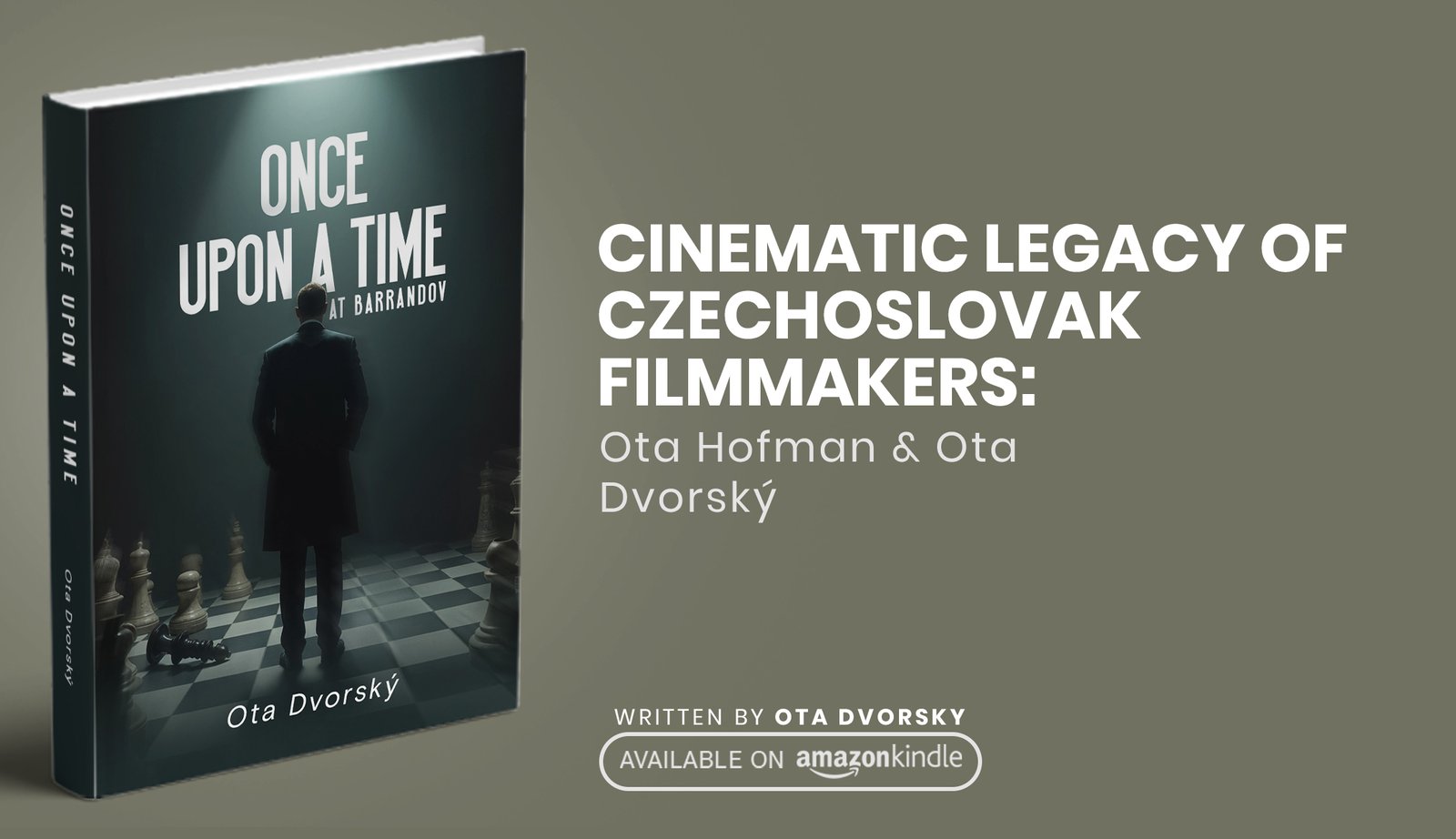
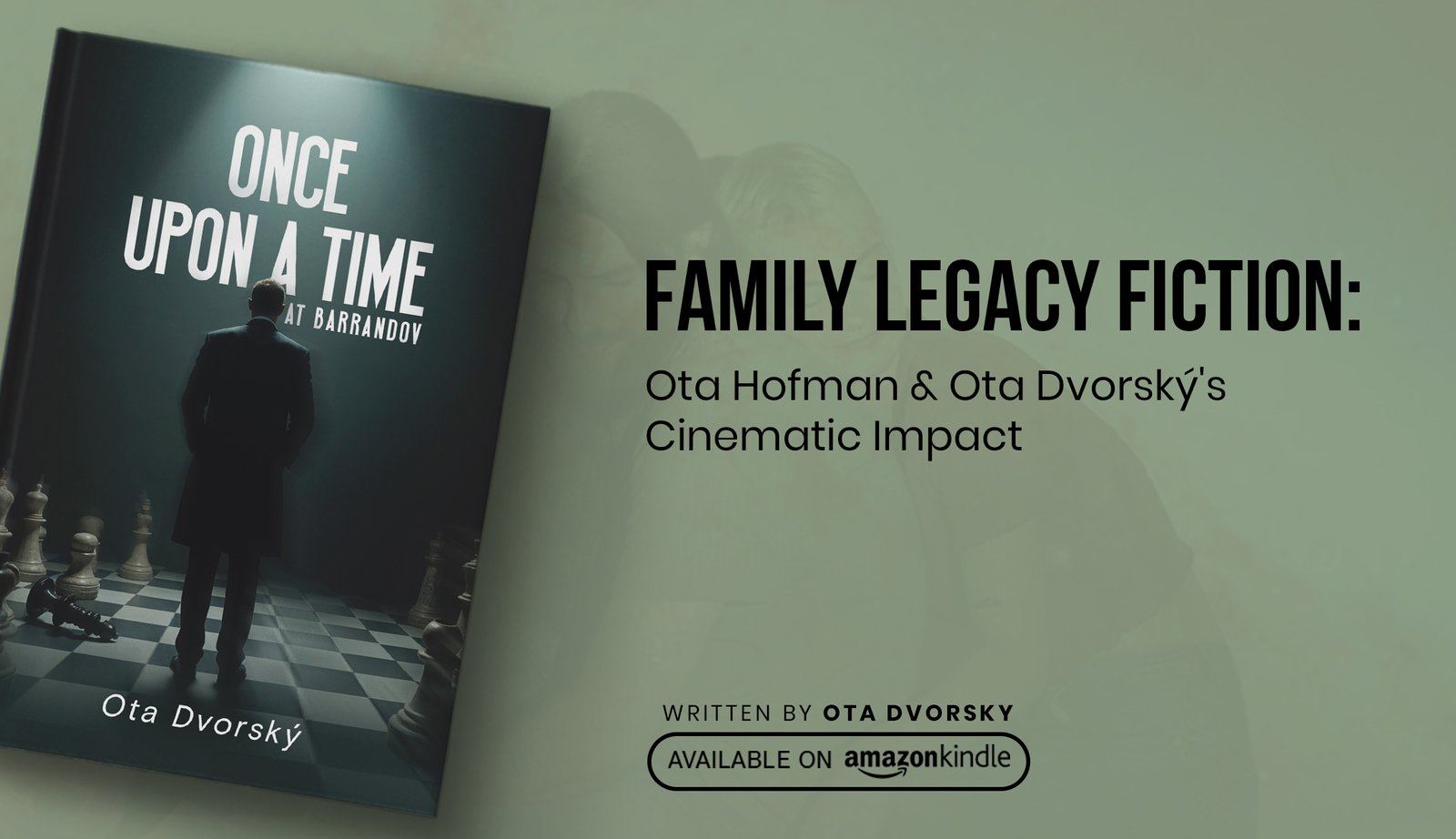
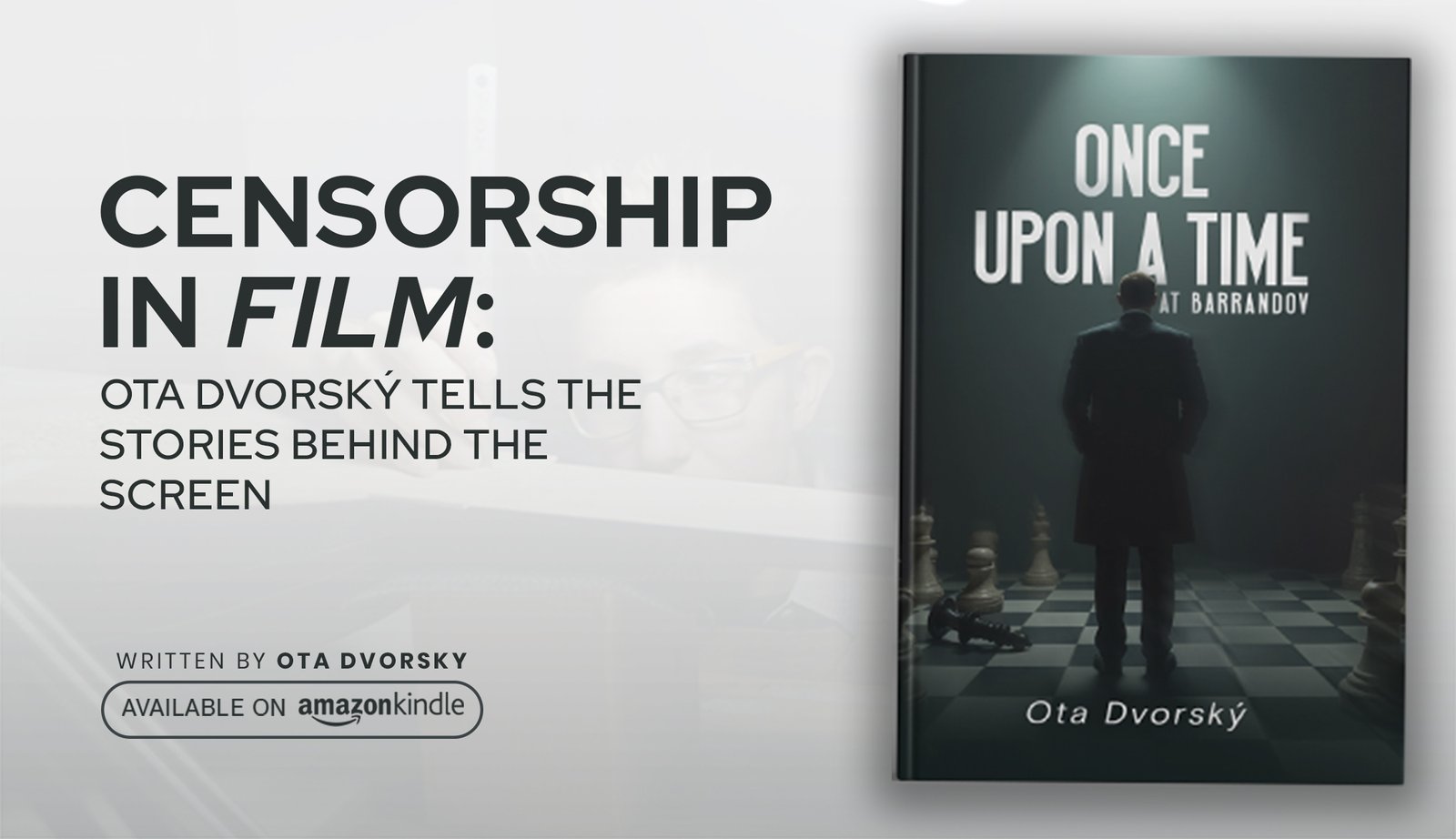
For readers inspired to explore the beauty of Czechoslovak film magic, Ota Dvorský’s novel Once Upon a Time at Barrandov is an essential starting point. The book captures the creative heartbeat of Barrandov and pays homage to the filmmakers who kept art alive in silence.
Available now on Amazon and the author’s Books Page.
Learn more about the author’s mission and his connection to Czech cinema on the About Ota Dvorský page.
Discover more stories about film preservation, exhibitions, and literary reflections on the News & Blog Page.
Call to Action:
Discover the enduring charm of Czechoslovak cinema and explore timeless stories preserved by Ota Dvorský, where every frame tells the story of resilience, creativity, and the power of imagination.
Final Thoughts
Cinema is the collective memory of humanity. The cinema history of Czechoslovakia stands as one of its most luminous chapters, a story where visionaries transformed constraint into creativity. Through the enduring influence of Barrandov Studios, the artistry of Czech filmmakers, and the imagination born from Ota Hofman’s legacy, generations have learned that storytelling is a form of survival.
Thanks to Ota Dvorský’s dedication to film preservation, exhibitions, and literature, the echoes of that cinematic golden age remain vibrant today. His work is not just a remembrance of the past; it is a renewal of purpose for the future.
As long as his voice continues to celebrate these stories, the silver glow of Czech cinema will never fade.
For in every frame, there lives a truth too powerful to be forgotten, a truth that continues to inspire, teach, and unite across generations.